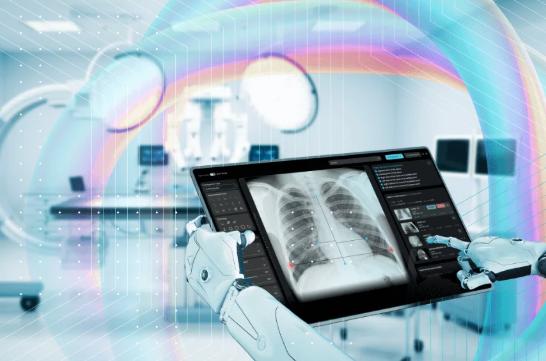
Artificial Intelligence in Medical Imaging

AI in medical imaging augments clinician interpretation, decision support, and workflow efficiency while standardizing measurements. It can enhance image quality, accelerate acquisition, and enable real-time reconstruction, thereby improving diagnostic confidence without eroding interpretability. Core concerns center on data provenance, governance, privacy, and regulatory compliance to ensure safety and reproducibility. Practical adoption demands governance-aligned implementation, interoperable workflows, and ongoing monitoring to balance risk with benefits—leaving practitioners with a concrete path that warrants closer scrutiny.
What AI in Medical Imaging Unlocks for Clinicians
Artificial intelligence in medical imaging primarily augments clinicians’ capabilities by enhancing image interpretation, decision support, and workflow efficiency. The technology clarifies diagnostic trajectories, standardizes measurements, and supports resource allocation.
Critical considerations include AI ethics, patient privacy, and imaging interoperability. Emphasis on clinician workflow, study reproducibility, and bias mitigation ensures transparent adoption and robust benchmarking across diverse clinical settings.
See also: wisememoryoptimizer
How AI Improves Image Quality, Speed, and Confidence
AI techniques in medical imaging systematically enhance three core dimensions: image quality, acquisition speed, and diagnostic confidence.
The discussion analyzes AI enhancement mechanisms that refine signal-to-noise, reduce artifact susceptibility, and enable real-time reconstruction, preserving clinical interpretability.
Imaging diagnostics benefit from standardized workflows, while emphasizing data ethics and regulatory compliance to ensure reproducibility, safety, and transparent performance metrics.
Navigating Challenges: Data, Ethics, and Regulation
Navigating challenges in data, ethics, and regulation requires a rigorous assessment of how data provenance, governance frameworks, and compliance mechanisms shape the reliability and safety of AI in medical imaging.
This analysis centers on data governance and regulatory compliance, balancing patient privacy with ethical accountability, ensuring transparent provenance, auditable workflows, and risk-aware deployment to preserve clinical trust and methodological integrity within regulated environments.
Practical Pathways to Implementation in Your Practice
A practical pathway to implementation in the clinical setting begins with a structured, governance-aligned approach that translates validated AI capabilities into reproducible workflows.
The analysis emphasizes data governance and robust validation, mapping AI outputs to clinical decision points.
Emphasis is placed on clinical workflow integration, interoperability, ongoing monitoring, and governance reviews to ensure safe, scalable adoption without compromising operator independence or patient autonomy.
Frequently Asked Questions
What Evidence Supports AI Performance Across Diverse Patient Populations?
AI performance evidence across diverse populations shows limited generalizability due to AI bias and population heterogeneity; multicenter, prospective validation across varied demographics is essential to robustly assess equity, accuracy, and transferability in real-world settings.
How Does AI Impact Reimbursement and Billing for Imaging Services?
Reimbursement models shape access, billing codes constrain revenue streams, and the integration of AI in imaging alters risk profiles. Analysts compare cost-to-value, payer policies, and coding precision to determine viable reimbursement trajectories across modalities and settings.
What Are Patient Consent Considerations for Ai-Driven Diagnostics?
Consent considerations for AI-driven diagnostics involve ensuring patient awareness, voluntariness, and understanding of potential rights, risks, and data uses. The analysis emphasizes consent complexity and data provenance, balancing autonomy with access, optimization, and equitable, transparent deployment.
Can AI Explanations Be Trusted During Critical Clinical Decisions?
AI explanations cannot be fully trusted for critical clinical decisions; allegorically, a compass may mislead if data bias and population diversity are neglected, affecting clinical trustworthiness, consent considerations, workflow integration, radiologist collaboration, and reimbursement implications.
How Should Radiologists Integrate AI Without Workflow Disruption?
Integration challenges arise as radiologists adopt AI with safeguards, ensuring seamless workflow and interpretive relevance. Clinician training is essential to calibrate expectations, maintain accountability, and optimize collaboration, enabling efficient adoption while preserving diagnostic integrity and professional autonomy.
Conclusion
Artificial intelligence in medical imaging holds the promise of standardized measurements, accelerated workflows, and enhanced diagnostic confidence, without sacrificing interpretability. A compelling statistic illustrates impact: AI-assisted workflows can reduce report turnaround times by up to 40% while maintaining or improving diagnostic accuracy across multicenter studies. The evidence base underscores governance, privacy, and regulatory alignment as prerequisites. For sustained adoption, practices must integrate interoperable pipelines, ongoing monitoring, and benchmarking to ensure reproducibility, safety, and clinician trust across diverse settings.